


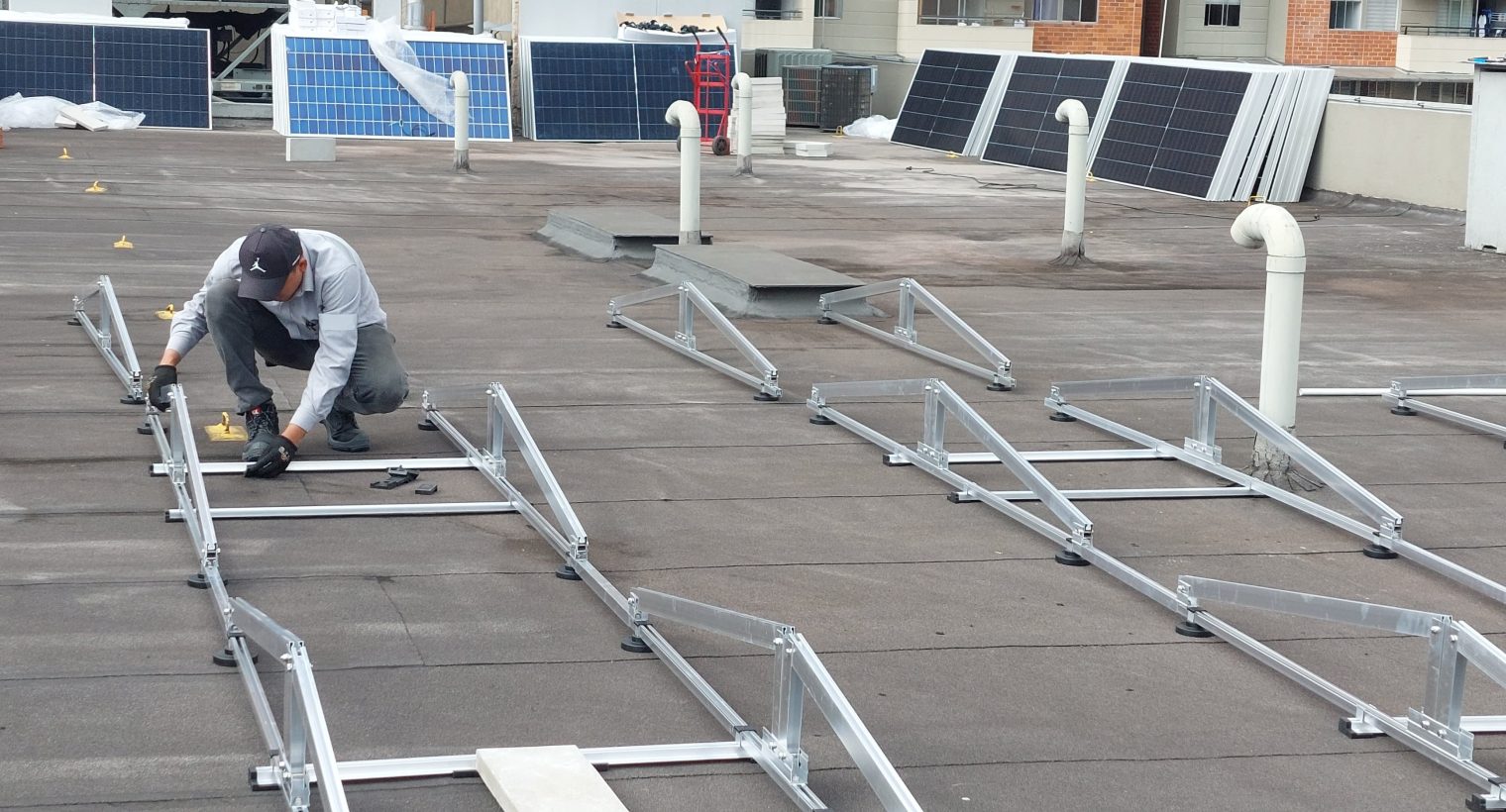
When choosing a photovoltaic mounting system, it is essential to consider module compatibility, orientation, roof characteristics and the environmental conditions at the installation site.
1. Solar module characteristics
Before choosing the mounting system, check the module dimensions and thickness, its tilt angle and the method of attachment.
The 29.1H and 26.1H systems, which use two triangular supports per module, clamp the panels along their long sides and are suitable for all modules, provided the manufacturer’s installation requirements are met. By contrast, the 29H and 26H systems, with a single triangular support, clamp panels along their short sides. For these systems, it is essential to confirm that the module permits this type of attachment.
2. Module spacing and orientation
Each mounting system has a fixed spacing between rows. The rows are joined by connecting bars to create a single array, helping optimise the amount of ballast required to secure the installation safely.26H y 26.1H are configured for east–west orientation, while the 29H y 29.1H systems face south.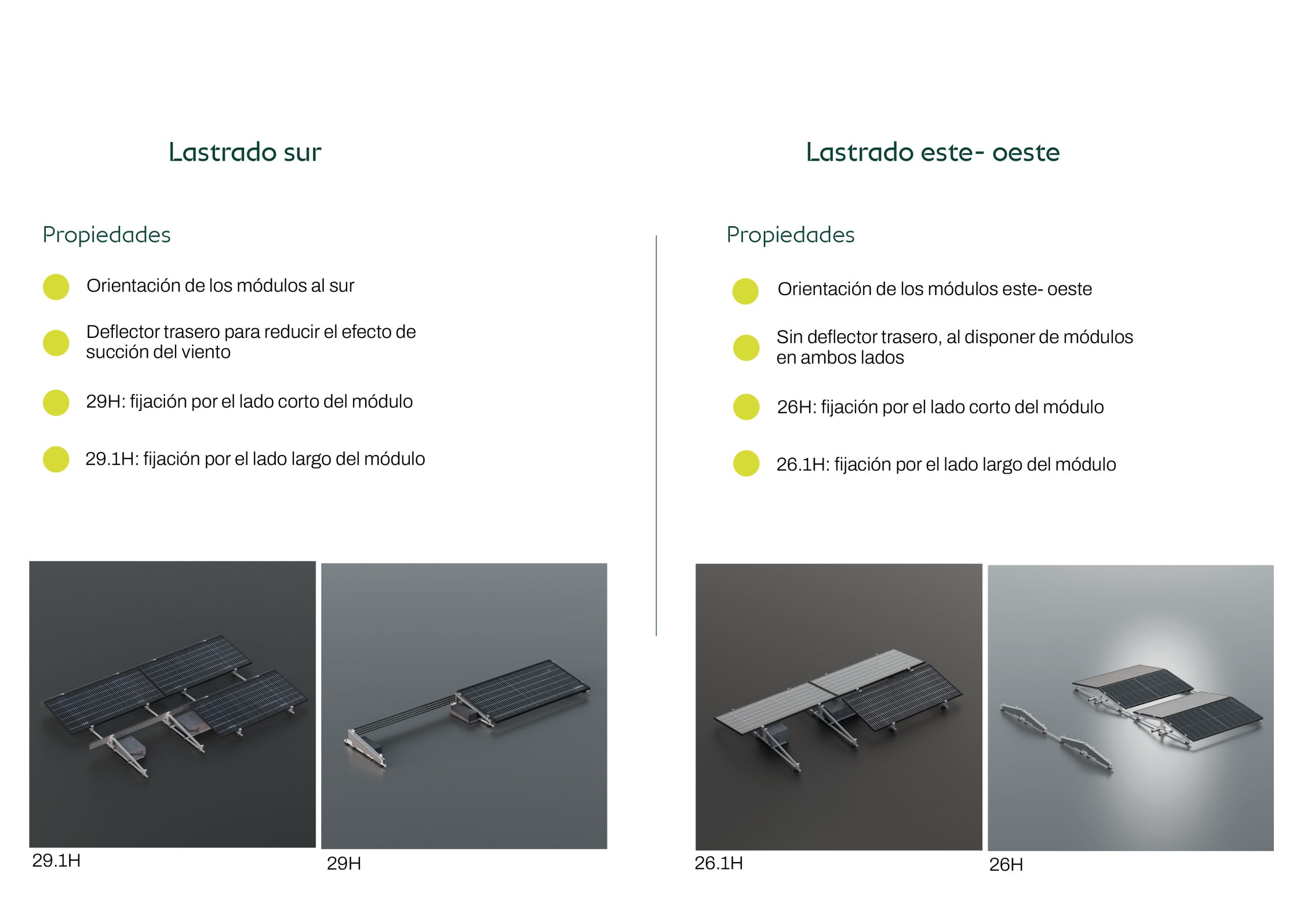
Comparison of Sunfer flat-roof mounting systems
| System | Orientation | Configuration | Module clamping |
|---|---|---|---|
| 26H | East–west | Single triangle | Short side |
| 26.1H | East–west | Double triangle | Long side |
| 29H | South | Single triangle | Short side |
| 29.1H | South | Double triangle | Long side |
3. Installation location and mounting system finish
The installation environment is another factor to consider when selecting the mounting system finish. Sunfer manufactures its solutions using EN AW-6005A T6 aluminium, an alloy used in structural applications for its mechanical properties.
In environments with greater exposure to corrosive agents, such as coastal areas or industrial sites with pollutants, the finish is especially important. According to the technical documentation, anodised aluminium is recommended for corrosive environments, while untreated aluminium can be used in non-corrosive environments.
Corrosive environments
Anodised aluminium is recommended in locations with greater exposure to corrosive agents, such as coastal or industrial areas.
Non-corrosive environments
Untreated aluminium can be used in environments without significant exposure to corrosive agents.
The choice must take into account the specific environmental conditions at the site and the technical instructions applicable to the system.
4. Flat-roof characteristics
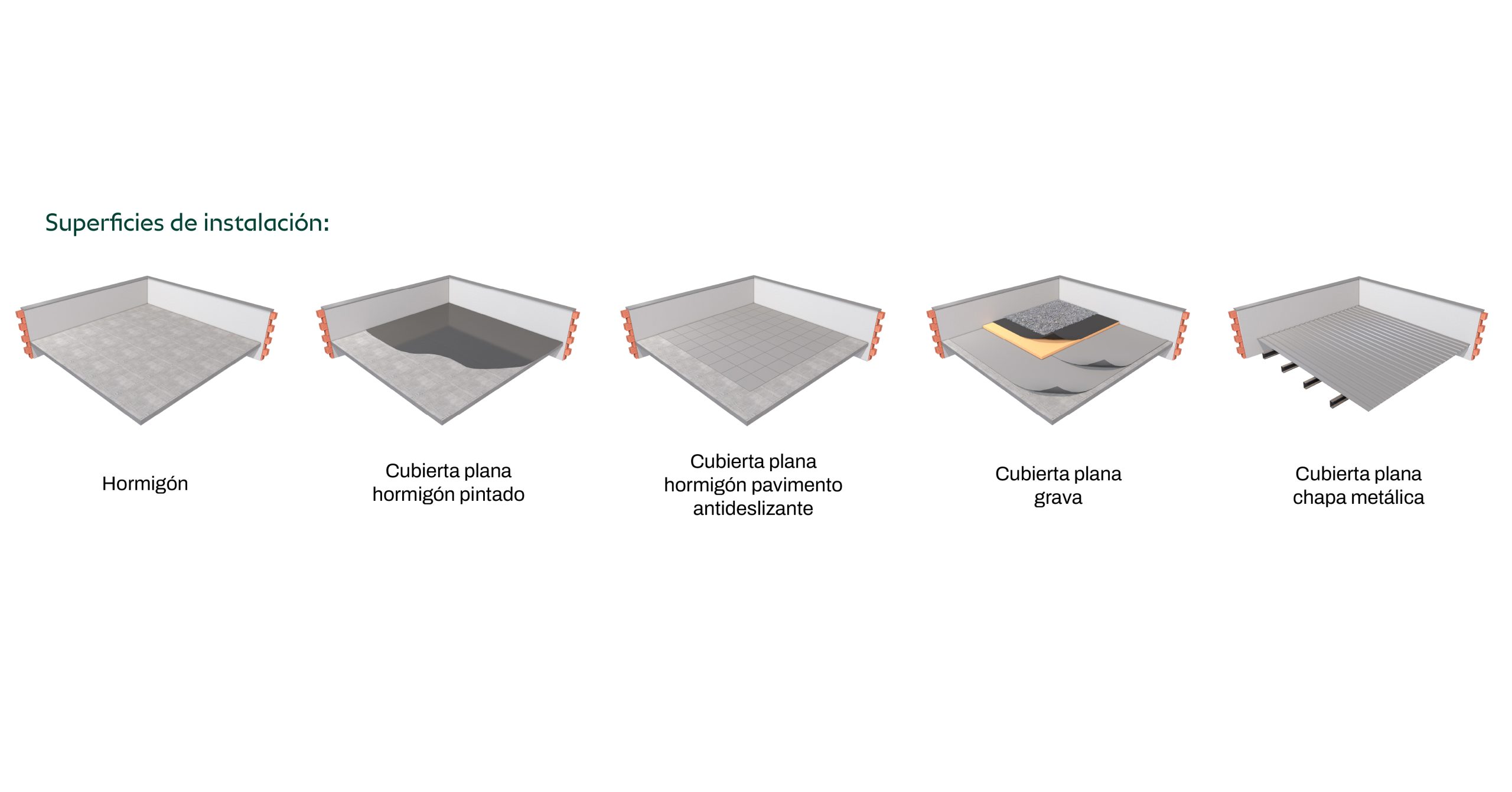
Four aspects of the roof should be checked: its load-bearing capacity, coefficient of friction, surface condition and rigidity or flexibility.
5. Maximum wind speed
The maximum wind speed expected at the location, as established under applicable regulations, affects the amount of ballast required and the type of mounting system that can be installed. According to the document, higher wind speeds require more ballast and stronger structures.
Choosing the mounting system according to project conditions
Selecting the right flat-roof mounting system requires assessing module characteristics, orientation, attachment method, roof condition and load-bearing capacity, as well as environmental conditions and wind exposure.
As a manufacturer, Sunfer offers different solutions to meet the needs of each project. The 26H, 26.1H, 29H y 29.1H systems have specific configurations designed for different installation conditions.
Additionally, with Sunfer Key, Sunfer’s calculation tool, you can enter your project data and obtain a solution tailored to its characteristics, making the selection and installation design process easier.
Choosing a reliable mounting system and sizing it correctly is essential for a safe installation suited to the actual conditions of each roof.
Do you need Sunfer mounting systems for your photovoltaic project?
At Vico Export Solar Energy, we distribute Sunfer photovoltaic mounting systems to installers and industry professionals. Explore the available mounting solutions and contact our sales team to request a quote tailored to your installation.